


Hundreds of Interesting Things to Learn About
Science, history, psychology, art, space, food, daily life — pick what sparks you.
At Nerdish, we believe the most interesting topics are the ones that make you stop and say “Wait, really?”
Each article takes 5–10 minutes to read — and actually teaches you something. Replace mindless scrolling with content that makes you genuinely smarter.
★ 4.8 · Loved by 100,000+ curious minds · Free to Download
Explore a Few of Our Topics — Hundreds More in the App
Art Deco Explained: Why It Remains Timeless
A hundred years later, we are still fascinated with Art Deco’s elegance and modernity. But what is the secret of its everlasting charm?

The History of Tea: How We Started Drinking the World’s Favorite Brew
Tea is the world’s second most popular drink after water, with a rich history spanning centuries. In this article, we trace its journey from ancient

Marie Curie: The Challenges of Being the First
In this article, we’d like to tell how Marie Curie influenced science, what discoveries she made, and what was their practical value to the world.

Who Was Grandma Moses and Why Naive Art Matters
Let’s learn a little about naive art (is it actually a real art?) and take a quick look at the work of one of the

Classical Music History: A 1,000-Year Journey Through Time
Discover how classical music evolved over a thousand years — from ancient chants and medieval organs to symphonies, operas, and space-bound melodies. It’s much more

When Mold Became Medicine: The History of Antibiotics
Let’s explore the history of antibiotics — how they were discovered, how they became life-saving medicines, and the challenges we face today with antibiotic resistance.
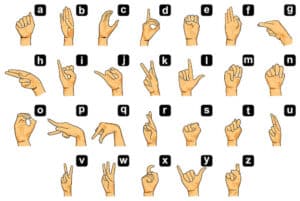
The History of Sign Language
In this article we are exploring the history of sign languages: when and where they began and how they’ve been developing ever since.
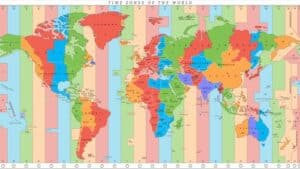
Time Zones History: Why Do We Have Time Zones?
Let’s dive into the history and the creation of modern time zones. Discover how time went from chaos to the global system we rely on

How to Know If a Painting Is Valuable or Expensive
Learn how experts determine if a painting is valuable using historical research, scientific analysis, and advanced authentication techniques.
What is GPS and How Does It Work?
GPS stands for the Global Positioning System. Let’s explore what GPS is and how it works. How do we use GPS in everyday life?
Exploring the Colorful History of Comics
Comics enjoyed by millions worldwide. In this article, we’ll trace the history of comics and examine how they have developed over the years.

How did Prohibition Change American Society?
In this article, we will explain Prohibition, when it started, and how long it lasted. We will discover how it changed American society.
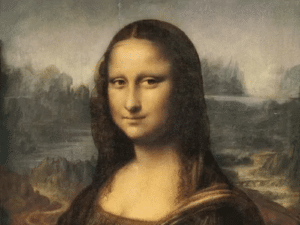
What Is So Special About Mona Lisa?
The Mona Lisa is a global icon, surrounded by mystery and centuries of fascination. In this article, we explain how it became so famous.
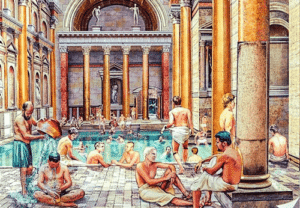
Ancient Rome: A Guide to the Everyday Life of the Average Citizen
What was life like in the ancient city of Rome? How did the average person live? And what did they do in their day-to-day lives?
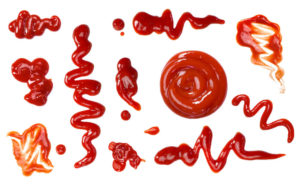
The History of Ketchup
Ketchup evolved from an Asian fish sauce to a popular global condiment, undergoing significant transformations in Europe and America, with innovations by Heinz shaping its

Napoleon Bonaparte: Five Surprising Facts You May Not Know
Napoleon Bonaparte, known for his military feats, also dabbled in writing and influenced modern law. His Code introduced civil liberties, divorce, and equality under the
The History of Wine
Wine’s journey spans over 8,000 years, from ancient regions to modern winemaking. It influenced cultural rituals, social customs, and today blends tradition with innovation.

Guernica by Pablo Picasso
Picasso’s Guernica powerfully captures the devastation of war, inspired by the 1937 bombing of a Basque town. Its symbolic imagery highlights the emotional impact of
When Did Coffee Become Popular? A Brief Coffee History
Coffee’s popularity grew from its origins in Ethiopia, spreading to the Middle East, and later Europe. By the 17th century, it became integral to social
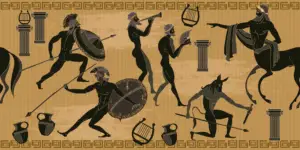
Ancient Greece: A brief guide to the history, culture and daily life
Ancient Greece, shaped by city-states like Athens and Sparta, is renowned for its contributions to democracy, philosophy, and culture.

When Were Wristwatches Invented?
Wristwatches evolved from pocket watches in the late 19th century, becoming practical during wartime when soldiers needed hands-free timekeeping.

What do we know about Nefertiti?
Nefertiti, known for her beauty and powerful role as co-regent with Amenhotep IV, was central in Egypt’s religious reform.

Why do people like spicy food?
Spicy food lovers enjoy the thrill of heat! Discover the science behind spice cravings, cultural influences, and health benefits of eating chili peppers.

How are space photos taken? What does space really look like?
Space imagery often blends science with artistic interpretation. Telescopes capture data in invisible wavelengths, requiring digital processing for public viewing.

Banana: the world’s most popular fruit?
Bananas, a top global food crop, are grown in tropical regions and come in over 1,000 types. They are vital for trade and nutrition worldwide.
Why do we still have kings and queens today?
Monarchies persist due to religious, cultural, and symbolic reasons. While most monarchs have limited powers today, they still play key roles in national identity and
How did Hitler rise to power?
Hitler’s rise to power was fueled by post-WWI Germany’s instability. He manipulated public anger, using fear, rhetoric, and alliances to seize control.
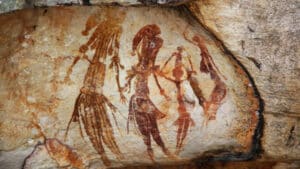
Becoming Human: When Our Distant Ancestors Invented Art
The origins of art trace back over 70,000 years, with early Homo sapiens creating symbolic objects and intricate patterns.

What Curious Minds Are Saying
How does Nerdish select interesting topics to learn about?
The world around us is interesting enough on its own and we don’t have to look far. At Nerdish, we simply take familiar things and ask: why does this work this way? when did this start? how did nobody tell us this before?
Some of our best articles were inspired by our own children. “Why do cats choose to live with humans?” “When were traffic lights invented?” These sound like simple questions, but once you start digging, you can’t stop.
We believe this is exactly what keeps curiosity alive: not chasing exotic topics, but finding the surprising depth in things you see every day. It’s also why Nerdish resonates with people across every continent — because curiosity about the world around us is something we all share.
And there’s a deeper benefit too. Exploring a wide range of topics builds general knowledge: the foundation that quietly connects ideas across different fields. Research shows that people with broad general knowledge think more flexibly, spot unexpected connections, and approach problems more creatively. This is one more reason why we encourage everyone to have Nerdish on their device. It’s not just entertaining — it literally makes you smarter in ways you didn’t expect.
How do I find interesting topics that match my personal curiosity?
The easiest way is to start with what already makes you stop scrolling. A headline that caught your eye, a question someone asked that you couldn’t answer, something you saw and thought “huh, I never actually knew how that works.”
Curiosity doesn’t need a plan — it needs a starting point. At Nerdish, we organize topics across science, history, psychology, art, technology, and daily life, so you can follow whatever pulls you in that moment. Some people stick to one area. Others jump between completely different subjects and love the variety.
Both approaches work. The only wrong move is waiting until you feel “ready” to learn — because that moment rarely comes on its own.
And your learning journey doesn’t have to stop with Nerdish. Think of the app as a starting point — a place to discover what genuinely interests you. Once a topic clicks, you can always go deeper: a specialized course, a book, a documentary. That’s exactly how it should work.
But the most important thing is to keep curiosity alive. Ask questions. Look things up. With the tools we have today, finding answers has never been easier. Do this consistently — day by day, topic by topic — and something remarkable happens: you build a unique body of knowledge that is entirely your own. Things you’re genuinely interested in. Things you might already know better than most people around you.
What should I do if I don't know what I'm curious about?
This is more common than you think — and it’s usually not a lack of curiosity, but a lack of exposure.
When we spend most of our time inside the same routines, the same feeds, the same conversations, our curiosity doesn’t disappear — it just doesn’t get triggered. It needs new input to wake up.
The simplest thing you can do is start somewhere random. Pick a topic you know almost nothing about: ancient civilizations, how vaccines work, why certain music makes you emotional and spend ten minutes with it. You don’t have to commit or love it. You’re just looking for that small spark of “oh, that’s actually interesting.”
This is exactly where Nerdish helps. With hundreds of topics across completely different fields, it’s designed for exploration rather than commitment. You’re not signing up for a course — you’re browsing, following what catches your eye, and giving yourself permission to be surprised.
At Nerdish, we’ve seen this happen thousands of times. Someone opens an article about the history of tea with zero expectations and ends up reading about trade routes, colonial history, and the economics of caffeine. One topic leads to another. That’s just how curiosity works.
So if you don’t know what you’re curious about yet — start anywhere. The rest will follow.
Is it better to learn about many different topics or focus on one subject?
Honestly, both work, and the right answer depends on where you are in your curiosity journey.
If you’re just starting out, exploring broadly is almost always the better move. Exposure to many different subjects helps you understand what genuinely excites you. It also builds general knowledge that makes you a more creative and flexible thinker — because the most unexpected connections often happen between fields that seem completely unrelated.
At some point, something will click stronger than the others. That’s when it makes sense to go deeper — from a Nerdish article to a book, a course, or a community of people who share that interest.
But don’t feel pressured to specialize before you’re ready. Curiosity is not a straight line. It’s perfectly fine to wander for a while before you find your direction.
How many interesting topics and articles does Nerdish have?
The Nerdish library currently has hundreds of topics spanning science, history, health, art, technology, and daily life — and we add new ones regularly. If you decided to read everything in one go, it would take you around 50–60 hours. That’s more than two full days of genuinely interesting content.
Inside the app, you’ll find even more than what’s shown on this page, including topics we haven’t published on the web yet.
But honestly, the number matters less than the variety. Whether you have five minutes or an hour, there’s always something new to discover — and something that will make you think a little differently about the world around you.